Sunset by Design: What Legacy Naming Conventions Reveal About Security's Compatibility Problem
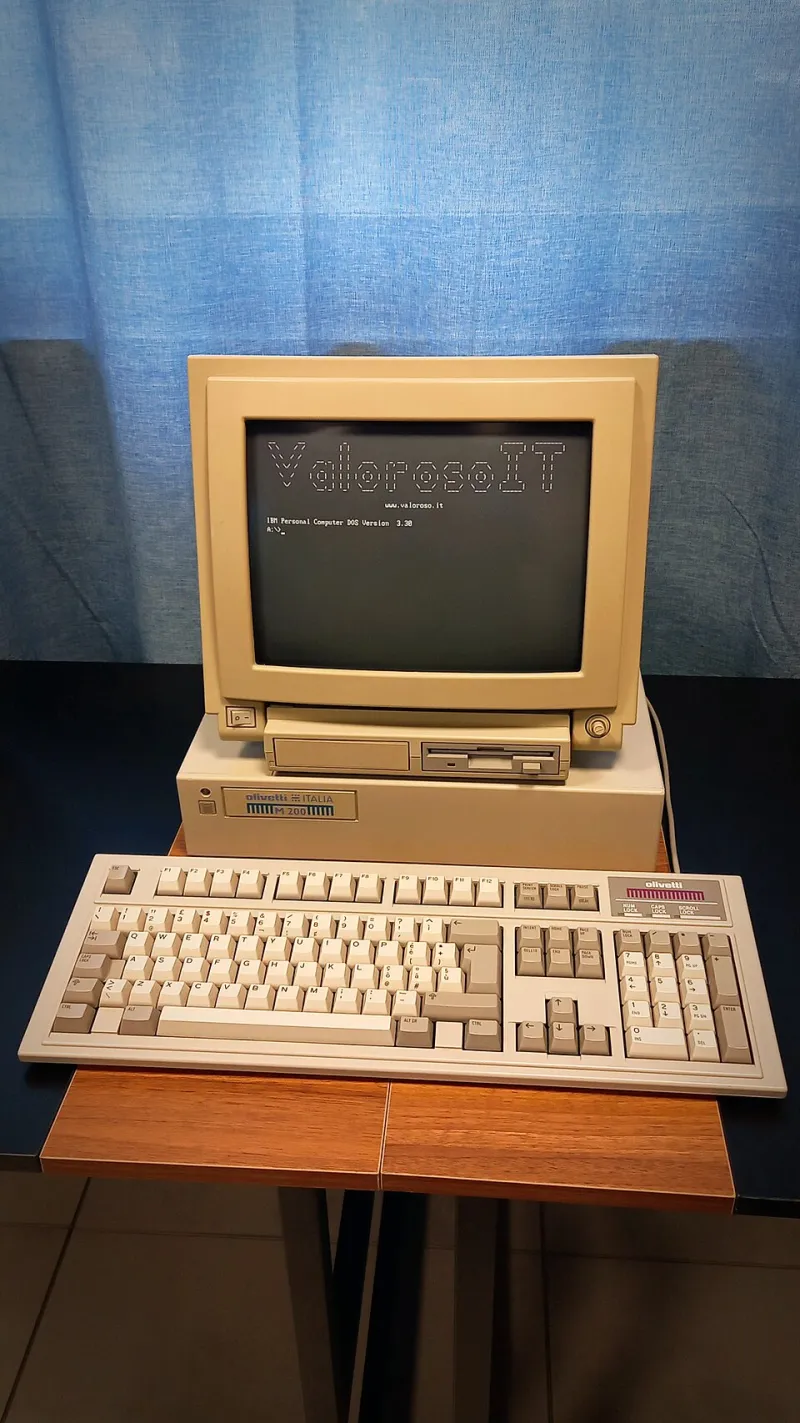
Photo: ValorosoIT, CC BY-SA 4.0, via Wikimedia Commons
Every engineer who has worked in the industry long enough eventually encounters the same phenomenon: a name that no longer means what it says. The term "64-bit" itself carries this baggage — a reference to computing's transition era, when architectures that once defined the frontier became the legacy that everyone had to support. The x86-64 instruction set is named after a compatibility exercise. Security engineering, it turns out, has accumulated precisely the same kind of historical sediment, except the cost of carrying it forward is measured in breach exposure rather than memory addresses.
The Long Shadow of "Backward Compatible"
TLS 1.0 was formally deprecated by RFC 8996 in 2021 — roughly a decade after practical attacks made it indefensible. The reason for the delay was never a technical mystery. It was the same reason 3DES persisted in payment systems until NIST disallowed it, and the same reason 2048-bit RSA still anchors enterprise PKI: someone, somewhere, had a client that could not be upgraded.
Backward compatibility is not a villain. It is one of the internet's great engineering virtues, and the willingness to keep old things working is why the web is usable at all. The problem is that security operates on a different clock than compatibility. A cipher does not become slightly less secure as it ages; it crosses a threshold, and everything behind it moves from "protected" to "recorded, awaiting decryption." Compatibility debt in security is not a maintenance cost — it is a standing liability that compounds silently.
Where the Debt Accumulates
The pattern shows up in three recurring places.
First, protocol negotiation. Any protocol that offers a menu of algorithms inherits the weakest one a client selects. SSH servers that still permit ssh-rsa signatures, TLS configurations that retain CBC cipher suites for a handful of legacy endpoints — these are negotiated downward by any attacker who can influence the handshake.
Second, file and message formats. Encrypted archives, disk images, and proprietary backup formats embed their cryptographic choices at creation time. An organization that standardizes on a format today is making a cryptographic commitment for decades. There is no cipher suite renegotiation for a backup tape written in 2019.
Third, and most insidiously, in code that never appears in any threat model: embedded key derivation, hardcoded legacy parameters, and version gates written by engineers who retired years ago. This is the firmware equivalent of a 16-bit compatibility shim — invisible until it is the only path an attacker needs.
A Framework for Sunset by Design
If compatibility debt is inevitable, the response should be structural rather than reactive. Protocol and library authors can adopt what might be called sunset by design: building the retirement of weak primitives into the specification itself, not into an eventual emergency patch.
Concretely, that means four commitments:
-
Published deprecation timelines at introduction. When a new algorithm is added to a protocol, its predecessor's removal date should ship in the same document. NIST's transition guidance for post-quantum algorithms is the closest current example — migration pressure exists because the timeline is explicit.
-
Deprecation telemetry. Servers and libraries should log, not just permit or reject, use of deprecated primitives. You cannot sunset what you cannot observe. Most organizations discovering legacy TLS usage do so during an outage, not a dashboard review.
-
Negotiation asymmetry. Clients should be required to advertise modern capability before legacy fallback is honored. This inverts the usual dynamic, where the attacker chooses the floor.
-
Data-format versioning with re-encryption paths. Long-lived encrypted artifacts should carry version metadata that makes migration a scheduled engineering task rather than a forensic archaeology project.
The Lesson From the Naming
The computing industry eventually solved its 64-bit transition not by abandoning compatibility but by making it a deliberate, documented bridge — with a known destination. Security engineering deserves the same discipline. The alternative is a cryptographic landscape where every protocol is forever negotiating with its own history, and every negotiation ends at the lowest common denominator.
The question is not whether weak ciphers will be deprecated. It is whether the deprecation will be engineered, or merely survived.